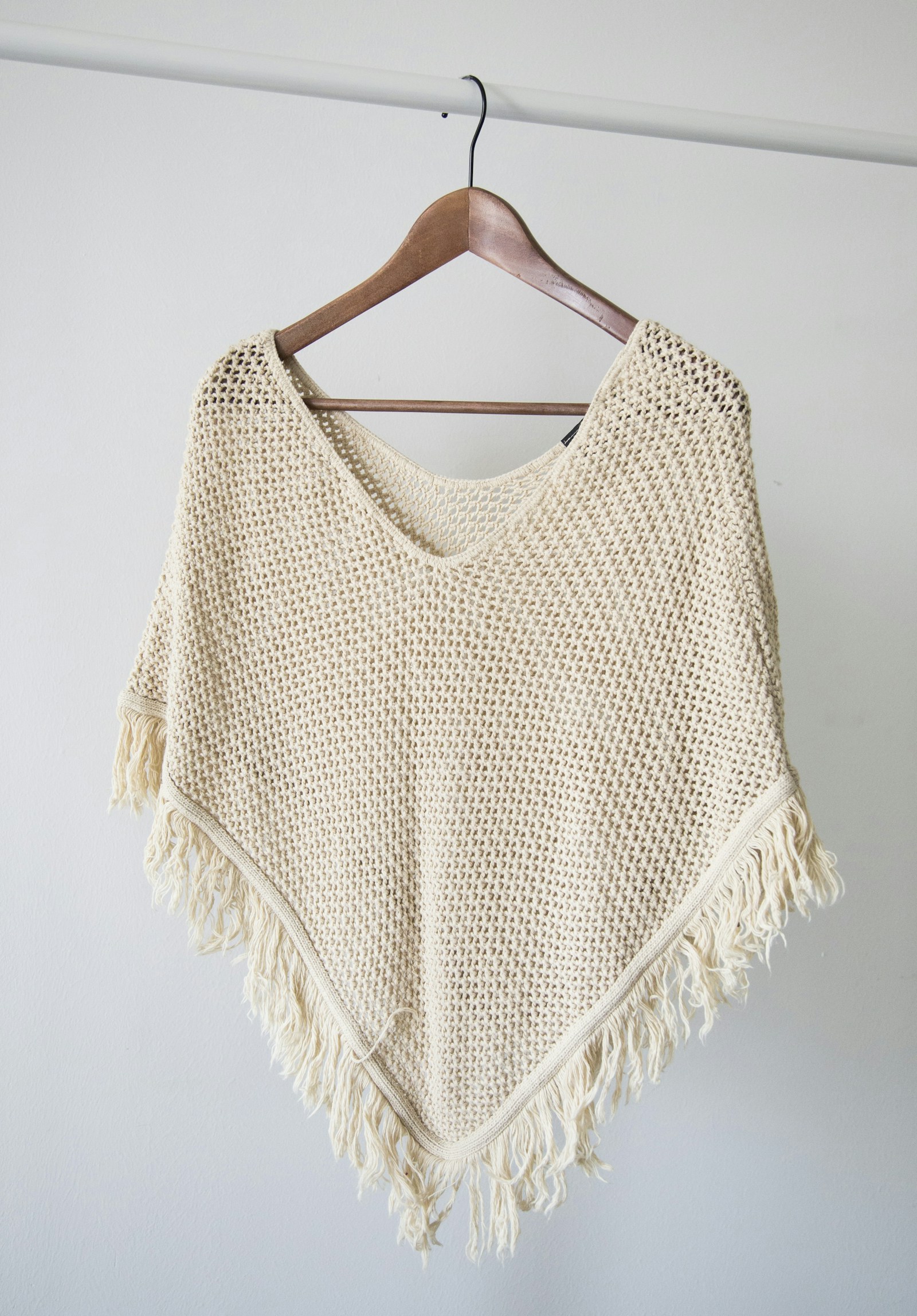
A favourite jumper often becomes inconvenient at the laundry stage: the label needs attention, the drying space is occupied and the next cold morning arrives before it is ready. Knitwear care is easier when the routine begins before the garment goes into the wash.
There is no single method suitable for every knit. Fibre, construction, trim and the manufacturer's instructions all matter. Use the sewn-in care label as your starting point, and avoid applying advice for one jumper to another simply because they feel similar.
Read the label while shopping
Check care instructions before buying, particularly if you need clothes that fit into a busy household routine. A garment that requires more attention than you can reliably provide may spend most of its time waiting to be washed.
Read the fabric composition too, but do not treat it as a complete care guide. Two pieces with similar fibre content may have different instructions because their construction or finishing differs. Decorative elements can add further requirements.
The GINETEX care-symbol guide is a useful reference when symbols are unfamiliar. Check the actual symbols on your garment rather than inferring permission from a generic description online.
Separate wearing from washing
After wearing, check for marks and decide whether cleaning is needed according to the garment's condition and care guidance. Let the piece settle in a clean, ventilated place before putting it away. Avoid leaving it crumpled in a damp bag or mixed with wet laundry.
If there is a small mark, consult the care instructions before treating it. Strong rubbing, unsuitable products or excess water can create a larger problem than the original spot. For a valuable or delicate piece, professional advice may be worthwhile.
Keep a small basket or designated shelf for items awaiting special care. The purpose is to prevent an absent-minded wash with ordinary laundry, not to create a permanent pile of neglected clothes.
Prepare the wash properly
Empty pockets and check for damage before cleaning. Close fastenings where the care instructions recommend it and keep rough hardware from other garments away from delicate surfaces.
Use a cleaning product suitable for the garment and follow its instructions for quantity. More product is not automatically more effective and can make rinsing harder. Select a washing method only when the label permits it.
If hand washing is required, allow enough time for the whole process, including drying. Avoid improvising a quicker machine programme simply because its name sounds gentle. Programme settings vary between machines, so read your appliance's guidance as well.
Give drying enough space
Follow the label's drying instruction. When flat drying is specified, prepare a clean, suitable surface and reshape the garment gently without stretching it. Support the whole piece rather than letting sleeves or edges hang over the side.
Keep the drying area ventilated and away from conditions the label prohibits. Do not assume direct heat is a safe shortcut. A garment that is still damp should remain out of a closed drawer.
Plan around the drying space you actually have. Washing several bulky knits at once may create a practical bottleneck, even if each can be washed successfully. Smaller batches can be easier to manage.
Store and maintain the pieces you use
Fold items that may stretch when hung, supporting the fabric as you move them. Avoid overcrowding a drawer until every piece is compressed and difficult to find. Keep storage clean and inspect garments periodically.
If pilling appears, check whether the manufacturer offers care advice. Any removal tool should be suitable for the fabric and used cautiously; pulling pills by hand can damage fibres. Repair small issues before they become more difficult, or ask a qualified repair service.
The tradeoff with delicate knitwear is time. A beautiful piece can be worth careful maintenance, but everyday layers should match your available effort. Our light layers guide helps choose the job each knit needs to do, while the capsule wardrobe guide keeps the overall selection manageable.
FAQ
Can every wool jumper go on a wool programme?
No. Check the garment label and your machine's instructions. The programme name does not override a label that requires another cleaning method.
Should I buy a specialist care tool?
Only when it solves a real need and is suitable for your garment. Start with careful handling, correct washing and enough drying space before adding equipment.