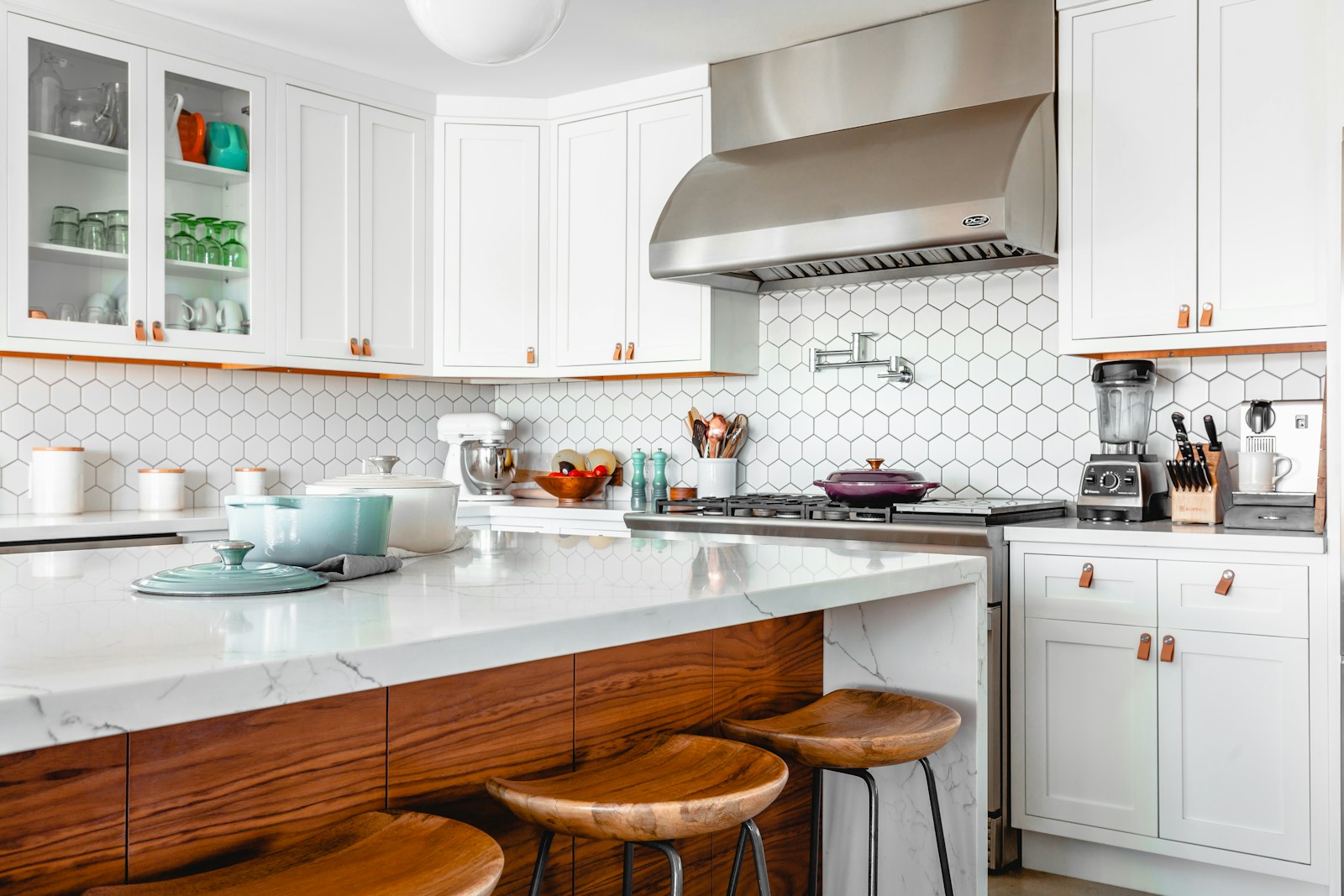
In a small kitchen, the hardest part of making dinner is sometimes finding somewhere to put the chopping board. A kettle, toaster, drying rack and collection of attractive jars can occupy the entire working surface before cooking begins. The aim is not an empty counter. It is a counter with enough clear space for the meal you make on an ordinary Tuesday.
Find the preparation space first
Place your largest regularly used chopping board where you normally prepare food. Allow room beside it for ingredients and a bowl for scraps. This is your working zone. Photograph it with the counter clear so you can remember how much space the actual task requires.
Now identify the cooking and washing zones. Utensils used at the hob should be accessible without crossing the preparation area repeatedly. Dishwashing supplies should stay near the sink. Keep food preparation away from dirty dishes where possible, and follow the cleaning instructions for your surfaces and equipment. Organization should make sensible kitchen habits easier.
Sort appliances by frequency
Make three groups: daily, weekly and occasional. A daily kettle usually deserves a permanent home. A mixer used for one birthday cake each year probably does not. Before moving an appliance into a cupboard, check that you can lift it safely and that the shelf will support it. Heavy equipment stored overhead creates a new problem.
Do not squeeze appliances into decorative enclosures while they run. Follow their instructions for ventilation and distance from surrounding surfaces. A tidy corner is not useful if the toaster cannot be operated properly. Keep the cable route practical, with plugs accessible and cords away from water and heat.
Give loose items a boundary
Cooking oil, salt and a frequently used grinder can share a washable tray. The tray makes wiping underneath easier and tells you when the collection is growing. It should be smaller than the space available, leaving room to lift it without knocking over a utensil pot.
Decanting every ingredient is optional. Transparent containers can make stock easier to see, but they introduce washing, labelling and transfer work. Keep original cooking instructions, allergen information and use dates when transferring food. If a packet already stands neatly inside a cupboard, a new jar may add expense without improving the routine.
Use height with a clear purpose
A shelf riser can create two levels for mugs or bowls inside a cupboard. Measure the internal height, door clearance and shelf depth first. Check the item's weight limit and avoid unstable stacks. On the counter, vertical storage is most useful for frequently retrieved objects, such as a small board rack.
Wall storage requires more thought. A rail can free a utensil drawer, but exposed items need cleaning and suitable secure fixings. Check tenancy restrictions and the wall material before installing anything. Freestanding options are easier to move, although their feet still consume counter space.
Make washing up part of the layout
Choose a drying solution for your actual dishes. A compact rack that fits dinner plates is more helpful than one with many accessory slots you never use. Look for a stable base, removable parts for cleaning and a drainage arrangement that suits the sink. Measure with the rack fully extended, including handles or draining spouts.
The tradeoff between a permanent rack and a foldaway one is convenience. A foldaway design restores workspace after washing, but only if someone dries and stores it. A permanent rack is ready whenever needed but claims the same space all day. Neither choice fixes dishes that never leave it.
Spend only after a week of use
Try the new arrangement before ordering organizers. Notice what repeatedly migrates back onto the counter. That may be evidence that its cupboard location is inconvenient. For containers, prioritize washable surfaces, comfortable handles and dimensions that match the contents. Our storage comparison explains when a closed box earns its extra step.
For entertaining, clear one temporary serving area rather than redesigning the whole kitchen. The table for four guide keeps serving pieces purposeful so they do not become permanent counter clutter.
Frequently asked questions
Should every appliance match?
Only if appearance matters enough to justify replacement. Useful existing appliances can work together visually when nearby clutter is reduced and the arrangement feels deliberate.
Where should I put mail and keys?
Move them away from food preparation. A small landing point near the entrance is usually more convenient than making the kitchen counter serve as household storage.